Thursday, June 9, 2016

Sam & Dave Dig a Hole  

By Mac Barnett               
Illlustrated by Jon Klassen
Published date: 2014

Awards: 2014 Caldecott Honor, Winner of the E.B. White Read-Aloud Award, Winner of the Irma Black Award, Winner of the Wanda Gág Read Aloud Book Award,  A New York Times Best Seller,  A New York Times Notable Book, A Washington Post Best Children's Book of 2014, A PBS Best Picture Book of 2014,  A Guardian Best Book of 2014, A Horn Book Fanfare Best Book of 2014,  A Kirkus Best Book of 2014,  A Publishers Weekly Best Book of 2014, A Globe & Mail 100 Best Books of 2014 Selection,  A Huffington Post Best Picture Book of 2014, A BuzzFeed Best Picture Book of 2014, An Association for Library Service to Children Notables Selection,  A Toronto Public Library First & Best Book of 2014, A Reading Today Best Picture Book of 2014, A Junior Library Guild Selection

You’ll notice that this book has won awards for both the illustrations and the content. It’s a story that will engage your students immediately through the book’s humor and their own personal association with the main activity in the book—digging a hole. Each of your students who has ever thought about digging that ‘hole to China’ (and who hasn’t?) will immediately connect with Sam & Dave Dig a Hole and the hilarious adventure in which the two boys engage!

The engagement and connection make this a great book to use as mentor text for both writing and reading workshop. In writing workshop, I would use this book as a mentor for the lower grades to show the importance of illustration and how an author/illustrator can put context clues in the story illustrations to help deepen the reader’s understanding and enjoyment.  For older students, I would also emphasize using the illustrations to demonstrate and embed humor in the story. In addition, there is such a subtle, fun, humorous ‘twist’ at the end the story which leaves readers scratching their heads say, “Wait! What just happened?” This  is a difficult craft move for mature writers—but Sam & Dave Dig a Hole is an excellent mentor to demonstrate that subtlety for older writers who are ready.

The text is very simply written and the story is fun, so I would use Sam & Dave Dig a Hole in reading workshop with students working on fluency and at the end of the story— we would definitely work on questioning!

Book Talk
Brothers Sam and Dave decide it is time to dig to discover something ‘spectacular’.

They get their shovels and their dog and they  dig and they dig.They come up empty handed—-but continue in their quest as they are determined to find that spectacular something.  

They stop for a drink of chocolate milk and a bite of animal crackers, but they continue to dig and dig.

At this point, the humor sets in for the readers because of the fun and clever cut-away illustrations. The illustrations reveal that the boys are VERY close to digging up spectacular diamonds—just inches away from their shovels.  But this digging decision or that digging decision always leads them a little bit off course of the jewels!

At this point, the boys are so deep underground and so very tired, they decide to nap. Their dog, however, has just sniffed a bone that is buried underneath the sleeping boys and starts digging.

Some Favorite Lines:
Sam and Dave ran out of chocolate milk. But they kept digging.  They shared the last animal cookie. But they kept digging.  After a while, Sam sat down. “Dave,” he said, “I’m tired. I can’t dig anymore.”  “ I'am tired, too,” said Dave.  “We should take a rest.”

The next few pages is when the REAL mystery begins as the boys are seen falling through the hole/ earth and finally several pages later, landing back home—-but is it really home?  

Readers will have fun comparing the illustrations from the beginning of the story and end of the story and trying to figure out what really did happen!

Suggested Uses As a Mentor Text:
Book Genre: Realistic Fiction
Reading Workshop Strategies: Maintaining Fluency, Monitoring and Correcting, Making Connections, Inferring, Questioning
Writing Workshop Strategies: Narrative Writing, Personal Narrative, Boy Hook, Strong Endings, Small Moment, Grammar (quotations)

Mac Barnett’s website:  http://www.macbarnett.com/
Jon Klassen’s website:   http://jonklassen.tumblr.com/

Tuesday, June 7, 2016

Creature Features  
by Steve Jenkins and Robin Page
Published  2014

Steve Jenkins and Robin Page team together again for another outstanding informational and entertaining animal book.

I envy students now-a-days who have such an incredible array of choice in informational / non-fiction books!  When I was little—all we had in the way of informational books was the World Book Encyclopedia! 

And Steve Jenkins has contributed many, many informational books for children to enjoy!

I would use Creature Features as a mentor text that would model a ‘change-up’ from the ‘regular’ non-fiction text.  The book is presented in a question format on each page.  It is as if a child is asking an animal a question specifically about an uncommon and peculiar physical feature of the animal.  Each animal answers back in a fun, unique ‘voice’. I would use this book as a mentor text during  perhaps a rainforest or pond unit of study to encourage students to use a similar model to write about rainforest or pond animals.

Some favorite lines:
“Dear Egyptian Vulture:                           
Why no feathers on your face?”

“Are you sure you want to know? Really? Okay?
Okay, I’ll tell you. I stick my face into the bodies of the 
animals that I eat, and feathers would get pretty messy.”

“Dear leaf-nosed bat:
Seriously, is that your nose?”

“I know, I know-it looks strange. but my nose directs the high-pitched sounds I make, 
which helps me find my way as I fly.”

One thing that I particularly love about this book is that it will instinctively lead the students into wanting to research on their own and learn more about each animal. The fun way that the factual informational is given leaves the student begging for more!

I also absolutely love the illustrations by Robin Page! Each of the animals’ faces completely dominates the page it is on-beautifully and colorfully drawn, and with the unusual body features prominate on the page.

Suggested Uses As a Mentor Text:
Book Genre: Informational / non-fiction 
Reading Workshop Strategies: Fluency, Questioning, Search for and Use Information, Visualizing, Connecting
Writing Workshop Strategies: Informational Writing, Inspiring Writers, Boy Hook, Writers Voice

Steve Jenkin’s and Robin Page’s website: http://www.stevejenkinsbooks.com/

Sunday, May 29, 2016

Finding Winnie-           
The True Story of the World’s Most Famous Bear
By Lindsey Mattick
Illustrated by Sophie Blackall
Published 2015

Awards-2016 Caldecott Medal Winner…..as well as…Publishers Weekly Best Children’s Books of 2015, Picture Books; Horn Book Fanfare List: Best Books of 2015, Nonfiction; The New York Times Notable Children’s Books of 2015, Picture Books;  Booklist Best Picture Books of 2015; Booklist Lasting Connections, 2015;  ALA Notable Books for Children 2016, Younger Readers; New York Public Library’s 100 Notable Titles for Reading and Sharing 2015; Children’s Books 2016 Notable Social Studies Trade Books for Young People, K–2;  2016 CCBC Choices–Historical People, Places, and Events

Looking at the long list of awards Finding Winnie has racked up-there is no doubt that Finding Winnie is an excellent choice for a read-aloud, especially for grades K-2— and especially because of its connection to the development of AA Milne's character, Winnie-the-Pooh. 

What makes this particular version of the story poignant, is that it is written by the great-granddaughter of the man, Harry Colebourn, who originally found the black bear cub and named her ‘Winnipeg’ (later shortened to Winnie, of course.)

Being the ‘true story’—and it is—makes this book a wonderful example of a narrative non-fiction. It would be an excellent mentor text for older students-grades 5 and up-who may be learning the craft moves for this particular twist on informational writing. The story also effectively moves back and forth between modern times and long ago, adding flashbacks. This writer’s move is worth examining in this mentor text for students who are ready for it.

How would a writer weave storytelling with true, informational facts?  Finding Winnie is a perfect example!  At the end of the narrative, the author also provides readers with some wonderful, old family photos of Winnie and Harry Colebourn, Winnie sitting with the Canadian Regiment for which she was the mascot, and a photo of Christopher Robin Milne with Winnie in the London Zoo and with his father, author AA Milne, looking on. 

Students may want to also research beyond this story to how AA Milne came up with his ideas about Christopher Robin and Winnie-the-Pooh and connect that information to this story.

By the way—many educators that I have talked to about this book/story did not know of the actual true Winnie that served as the inspiration for AA Milne’s Winnie-the-Pooh.  

Did you?  ;-D

Book Talk
Finding Winnie starts out in modern times with a mother cuddling with her son at bedtime and the young boy begging to hear a story—the true story of ‘the bear’.

The mother begins to tell the story of a young Canadian veterinarian named Harry Colebourn who had a very special gift--a special way with animals.  He was eventually called to serve in the Canadian military in WWI. On his way to meet up with his regiment, he was at a train station when he saw an older man who looked like a trapper, with a bear cub. The trapper told Harry that the bear had lost his mother. Harry knew that the trapper would most likely mistreat the bear.

And even though Harry was heading to meet his army regiment and he knew in his head that he should walk away from this trapper and the bear cub, his heart told him to do something about it.

So he did. 

Some favorite lines: “Harry thought for a long time. Then he said to himself, “There is something special about that Bear.” He felt inside his pocket and said, "I shouldn’t.” He paced back and forth and said, “I can’t.” Then his heart made up his mind, and he walked up to the trapper and said, “I’ll give you twenty dollars for the bear.”

Whereas all the men in the regiment were thrilled to meet the bear cub, the colonel was not!  Harry had to do some fast talking, but was eventually able to convince the colonel to let the bear stay and be the regiment’s mascot. That is when Harry announced that her name was Winnipeg—named after their city from where the solldiers came. 

Winnipeg quickly became ‘Winnie’ and a favorite of all.  Harry trained her in many ways to behave and help out in ways that she could.  Soon the regiment was to be shipped to England to continue their training…..and somehow again, Harry managed to get permission to bring Winnie along, too.

Because of Harry’s veterinarian training, he was put in charge of the horses that would lead the regiment into battle.  Soon the regiment was preparing to leave for battle in France. Harry knew that it was no place for Winnie.  

Harry made arrangements for Winnie while he was to be gone.  He was able to place Winnie in the London Zoo, so that the zookeepers could watch over her properly until he returned.

**As a side story—while Winnie was at the London Zoo, a local author named Alan Alexander Milne (aka AA Milne) would take his son—named Christopher Robin Milne--to the zoo. Christopher Robin became friends with Winnie—and Winnie eventually became the inspiration for AA Milne’s character: Winnie-the-Pooh.

(It is so interesting to me how one story begins another!)

Harry Colebourn eventually did return to London after the war.  He saw how happy and content Winnie was in the zoo, so he left her there and returned to Canada with his story of Winnie, his memories and his photos.  Today at the London Zoo and in Winnipeg, Canada stand statues of Harry and Winnie.

Throughout the story—the little boy,(who happens to be name Cole after his great, great grandfather, Harry Colebourn), asks his mother questions and helps the story along.  The author used italics for the conversation between mother and Cole and normal font setting for the story she was telling.


Suggested Uses As a Mentor Text
Book Genre: Narrative Non-Fiction (historical)
Reading Workshop Strategies: Monitor and Correct,  Search for and Use Information, Summarize, Infer, Connect, Question, Boy Hook
Writing Workshop Strategies:  Informational Writing, Narrative Writing, Personal Narrative, Historical Informational Writing, Flashback

Lindsey Mattick’s Website: http://www.lindsaymattick.com/
Sophie Blackall’s Website:  http://www.sophieblackall.com/

Monday, May 23, 2016

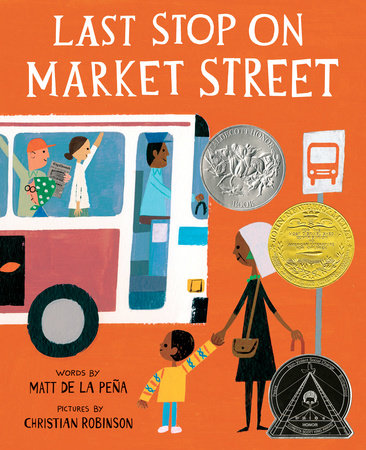
Last Stop on Market Street  

by Matt de la Pena
Illustrated by Christian Robinson
Published 2015

Awards:  Numerous-Incredible-Major! 2016 Newbery Award Winner, 2016 Caldecott Honor Winner,  2016 Coretta Scott King Illustrator Honor Winner , AS WELL AS-
–New York Times Notable Children’s Book of 2015 –Wall Street Journal Best Children’s Books of 2015 –NPR Best Books of 2015 –Boston Globe Best of 2015 –A Publishers Weekly Best Book of the Year –A Winter 2014-2015 Kids’ Indie Next Pick –Finalist for the E.B. White Read Aloud Award –BookPage Best Picture Books of 2015 –Horn Book Best Book of 2015 –Atlanta Parent Best Books of 2015 –Raleigh News & Observer Best Children’s Books of 2015 –Miami Herald Best Children’s Books of 2015 –2015 Horn Book Summer Reading List –Scholastic Instructor “50 Best Summer Books” –School Library Journal’s Top 10 Latin Books list –Center for the Study of Multicultural Children’s Lit “Best Multicultural Books of 2015” –Chicago Public Library’s Best of the Best Books 2015 –NYPL’S 100 Books for Reading and Sharing

To say that Last Stop on Market Street is an award winner on many levels is the understatement of the year!  If you need more convincing that this, indeed, is an exceptional book, I don’t know what it would be!

Since I’m a ‘picture book fanatic/junkie’ , the fact that a picture book won the Newbery this year is very thrilling!  Double the fact, that I advocate for using picture books as mentor texts-this is heavenly to me!!

Last Stop on Market Street would be an excellent read-aloud for all students of all grades levels.  The character development and relationship between Nana and grandson is one that many students can relate to. One of the many themes of the book—to respect all people no matter what their circumstance- is one that we would hope to give all of our students at all ages.

Last Stop on Market Street is also an outstanding example of ‘small moment’ or ‘seed’ writing. The story takes a seemingly mundane event—riding a city bus to a destination—into an experience exposing multiple stories of the different people who are on the bus who interact with each other during that small moment.

Last Stop on Market Street would especially be an outstanding mentor text to use for older students (grades 3-8) who are studying writer's craft. de la Pena’s writing is multi-layered with inferences and meaning which model for the young writers how to take a reading audience beyond the text. de la Pena’s use of words and manipulation of ‘correct’ sentence grammar  is very effective in his storytelling and is to note for students to emulate, as well.

I know many readers of my blog have also used Last Stop on Market Street  successfully as a mentor text this year.  Please feel free to add your suggestions in the comments. "It takes a village"...and we all learn from each other!

Book Talk
CJ and his Nana have finished at church and head to the bus stop. The bus will take them to their next destination of the day. Readers don’t know what that is yet—but from CJ’s reaction and questions—it’s obvious that he does not want to go!

CJ being very inquisitive and thoughtful- continues to question Nana about everything they do and see.

Nana’s responses are full of wisdom, gentleness and strength. And her responses are always accompanied with her deep, loving laughter.

Some favorite questions and answers:
CJ-‘How come we gotta wait for the bus in all this wet?’
Nana-‘Trees get thirsty, too. Don’t you see that big one drinking through a straw?”

CJ- “How come we always gotta go here after church? Miguel and Colby never have to go nowhere.”
Nana- “I feel sorry for those boys. They’ll never get a chance to meet Bobo or the Sunglasses Man.”

CJ- “How come that man can’t see?’
Nana-“Boy, what do you know about seeing? Some people watch the world with their ears.”

And my very favorite:
CJ- “How come it’s always so dirty over here?”
Nana- “Sometimes when you are surrounded by dirt, CJ, you’re a better witness for what’s beautiful.”

Nana makes the bus ride rich and meaningful by respectfully interacting with the various bus riders from different walks of life. As CJ feels sorry for himself for not having a car or an iPod, Nana converses with the blind man, gets the guitar man to play and somehow manages to get the whole bus involved in the song that he is singing. CJ is even taken out of his pouting and is taken in by the beautiful music being played.

When the bus driver calls out ‘Last stop on Market Street”, CJ and Nana get out and head towards their destination. The sidewalks are crumbly and there is graffiti everywhere. 

Despite initially not wanting to have come and being surrounded by poverty, CJ does see a beautiful rainbow arching over the Soup Kitchen—which is where the two are heading to work and serve food to the homeless population.

When they arrive, they do see their friends Bobo and Mr. Sunglasses-who are in line waiting for food.  CJ and Nana get started in their work and CJ does finally declare that he is really happy that they have come. So is Nana.

Suggested Uses As a Mentor Text:
Book Genre: Realistic Fiction
Reading Workshop Strategies:  Summarizing, Connections, Inferring, Analyzing, Visualizing
Writing Workshop Genre and Strategies:  Narrative, Small Moment, Elaboration-use of words and language, Character Development, Strong Female

Matt de la Pena’s website:  http://mattdelapena.com/
*** On his website, Matt de la Pena mentions giving his most requested workshop in which he talks about how he went from being a reluctant reader to having his MFA and becoming an author--an author who has won the Newbery Medal.  

Christian Robinson's website: http://theartoffun.com/

Sunday, May 15, 2016

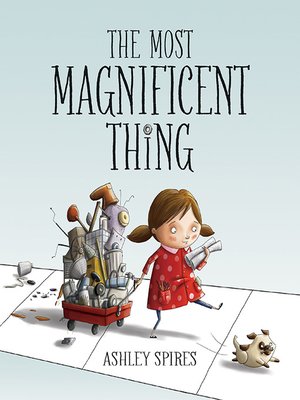
The Most Magnificent Thing
by Ashley Spires
Published 2014

Awards: Ontario Library Association Forest of Reading Blue Spruce Award Nominee (2015), Shining Willow Award Nominee (2015), Christie Harris Illustrated Children’s Literature Prize Nominee (2015)

The Most Magnificent Thing is a delightful, endearing story that would be an excellent addition to a school’s library of books supporting life skills—especially the life skill of perseverance as well as having a growth mindset!  As a mentor text for life skills, it would be an excellent read for grades k-5.

As a mentor text for writing, The Most Magnificent Thing provides a solid study of character development, especially for older writers in grades 3-5. Other craft moves to cover with students: the intriguing title which captures the audience's curiosity straight away and the strong ending, which concludes, with an amusing twist, the struggles the character has throughout the story.  

Interesting enough, the main character, a girl, and her best friend, her dog, are never named in the story.  Pronouns dominate the story, which would be an interesting grammar lesson, as well.

Book Talk
Readers meet the main character, simply called ‘the girl’ in the story, and her best friend, the dog.  The girl and her dog love to do all kinds of things together-racing, eating, exploring.  She especially likes to make things and the dog especially like to ‘unmake’ whatever she creates.

Then one day, she has an idea to make the most MAGNIFICENT thing!  She can see it in her mind’s eye and she is very motivated to get her ideas down on paper.  When she does, she is convinced that the most magnificent thing will be very easy to make! Readers do not know what the magnificent thing is yet.

She finds a good place to build her most magnificent thing and sets to work. But when she finishes, she has her doubts about it!

Some favorite lines: “When she finished she steps back to admire her work. She walks around one side. Her assistant examines the other side. It doesn’t look right. Her assistant picks it up and gives it a shake. It doesn’t feel right, either. They are shocked to discover that the thing isn’t magnificent. Or good. It isn’t even kind-of-sort-of okay.”

So, she tries again. Again it is wrong. So, she tries again. Again it is wrong. So, she tries again. Again it is wrong. So, she tries again. Again it is wrong.

She tries ten times to get it right! (Throughout all of her attempts, readers still are left guessing as to what the 'most magnificent' thing is!)

Finally, she gets very, VERY mad (and frustrated)!  She decides to take a walk and she does cool down. When she gets back to her house, sees all ten objects that she has made and sees that she could actually use pieces of each one to make her final project!

She does—and in the end she had indeed, made her most magnificent thing—a side car to attach to her scooter for her dog to ride in!

Suggested Uses as a Mentor Text:
Book Genre: Realistic Fiction
Reading Workshop strategies: Connecting, Fluency, Analyzing, Questioning, Inferring, Synthesizing
Writing Workshop genre and strategies: Narrative Writing, Character Development, Strong Lead, Strong Ending,Strong Female, Grammar: pronouns
Life Skills study: Perseverance, Growth Mindset

Ashley Spires website:  http://www.ashleyspires.com/

Monday, May 9, 2016

You Wouldn’t want to Be at 
the Boston Tea Party!     
  By Peter Cook
Illustrated by David Antram
Published 2014

This book is part of the “You Wouldn’t Want to be….” informational book series which has approximately 80 different titles, all connected to different kinds of big interest events throughout history. Whereas many of the titles focus on American history—many, also focus on Greek, Roman, Medieval, Egyptian and the like.

The “You Wouldn’t Want to be….” series is a fun, informational  group of books that cover interesting historical events and facts through a narrative that is lively and intriguing for students. I would recommend this mentor text for upper elementary and middle school students.

You Wouldn’t Want to Be at the Boston Tea Party  is a solid choice for an informational writing mentor text to model many of the text features students need to know about to include in their own informational writing. 

Starting before one even opens the book, the title is intriguing and invites immediate inquiry by students ("What? Why wouldn’t I want to be at the Boston Tea Party?”). In addition, it is an excellent example of a title that would invite- or grab- a reading audience into a book.

You Wouldn’t Want to Be at the Boston Tea Party is written as a narrative non-fiction, which makes it an easy read-aloud and demonstrates to students an effective way to write informational events and non-fiction texts. A fictional character (who is historically correct) is introduced,  ‘travels’ through the chapters and shares the events with readers through his eyes and experiences.

In addition, You Wouldn’t Want to Be at the Boston Tea Party is filled with non-fiction text features that will guide your students as they create their own informational texts: timelines, maps, headings, subheadings, captions, labels, table of contents, glossary, index.

The book actually begins right inside the book’s cover with a timeline of events before, during and after the Boston Tea Party giving the reader an overview of the historical significance of the main, historical, book-titled event. 

The story continues with each chapter covering an event introduced in the timeline, helping to cement the sequence of developments surrounding The Boston Tea Party. Each ‘chapter’ is placed over two open,facing pages in the book, so there is an unbroken flow of information on the specific topics making easy reading and understanding of the important topics. This organization and presentation of information also makes a great example /mentor for upper elementary and middle school writers.

Also to grab your students interests: the illustrations throughout the book are humorously done with a caricature style and amusing “Handy Hints” are given in a textbox in each open page section (Handy Hint-Get use to drinking coffee. Tea is going to be in short supply!”).

Other Titles in this series (all written as narrative non-fictions, with similar text features and humorous caricature illustrations) :
You Wouldn’t Want to Be….
American Colonist                American Pioneer      Civil War Soldier          Egyptian Mummy
Roman Gladiator                  on the Titanic            Medieval Knight           Viking Explorer
on the Mayflower                 on  Apollo 13              Wild West Town           Pyramid Builder
…..and many, many more!


Suggested Uses as a Mentor Text:
Book Genre: Informational / Non-Fiction Text
Reading Workshop strategies: Reading Informational Text,   Search for and Use Information, Anaylyzing, Questioning Visualizing
Writing Workshop genre and strategies: Informational Writing, Elaboration, Details, Strong Title/ Strong Lead, Non-fiction text features
Curriculum Connection: Social Studies/ History

Monday, May 2, 2016

Owl Moon           
 by Jane Yolen
Illustrated by John Schoenherr
 Published 1987

Awards: 1988 Caldecott Winner

 Owl Moon is one of Jane Yolen’s many treasures that she has given the world!

Yolen’s masterful use of language-descriptive words so naturally and beautifully woven into the  fabric of this narrative-make Owl Moon an outstanding mentor text in writing workshop. 

Although the story presents itself as a simple picture book to be used with the lower elementary grades, the depth of Yolen’s writer’s craft makes Owl Moon an excellent mentor for older elementary and even middle school students.

The free verse form in which the story is written demonstrates to student writers that the text of the story does not have to be ‘heavy’ or dense to be meaningful and impactful to one’s audience. Owl Moon would also be an excellent mentor for memoir or small moment.

Interviews with Jane Yolen reveal that Owl Moon reflects activities her family did when her children were young. 


Book Talk
A young girl finally gets her chance at a long-time family activity and tradition—going out into the woods on a cold, quiet winter’s night with her father to go owling.

She describes her quiet walk with her father through the night—the sound she hears from the trees, the crunch of the footsteps on the snow, the animals, a far away train.  She also reveals  her excitement of being with her father (like all of her siblings before her) and possibly, possibly seeing an owl.

Some favorite lines:
"Our feet crunched
over the crisp snow
and little gray footprints 
followed us.
Pa made a long shadow,
but mine was short and round.
I had to run after him
every now and then
to keep up,
and my short, round shadow
bumped after me."

Father tries to call to the owl several times, but all that is heard back is silence. They don’t hurry  as they know that owing requires patience and perseverance.

Father and daughter continue to quietly travel through the night-calling, listening and moving along.

Finally—a brief answer to Father’s call. They wait and their patience is rewarded with more calls— and then the sighting of the magnificent owl!  The owl and girl stare at each other—take each other in, admire each other—-and then the owl is off.

More favorite lines:
"All of a sudden
an owl shadow,
part of the big tree shadow,
lifted off
and flew right over us.
We watched silently
with heat in our mouths,
the heat of all those words
we had not spoken.
The shadow hooted again."

Father and daughter quietly walk back home with the experience settling in their hearts and minds—becoming part of who they are.

Suggested Uses as a Mentor Text:
Book Genre: Realistic Fiction
Reading Workshop Strategies: Fluency, Questioning, Connecting, Inferring, Synthesizing, Visualizing
Writing Workshop Strategies: Narrative, Personal Narrative,Q Memoir, Elaboration, Grammar, Inspiring Writers, Writer’s Craft


Jane Yolen’s website: http://janeyolen.com/

Tuesday, April 26, 2016

The Chronicles of Harris Burdick 
 By Chris Van Allsburg
 Published 2011

If you teach upper elementary and are covering units of study on Fantasy in reading or writing, The Chronicles of Harris Burdick is an outstanding selection for a go-to mentor text!  It should be attached to your hip during a fantasy UoS!

In 1984, Chris Van Allsburg introduced the  world to The Mysteries of Harris Burdick—a book filled with mysterious illustrations that bordered between fantasy and reality.  The illustrations were also accompanied with a title and just one, strange, cryptic sentence—pulling the reader in immediately! (Usually stories are already spinning in a child’s head before they know it!)

Fast forward to 2011—Van Allsburg published an adaptation of Harris Burdick.  This time he reached out to fourteen outstanding authors (including Lois Lowry, Kate DeCamillo,LInda Sue Park, Walter Dean Myers, Jon Scieszka, Stephen King and Van Allsburg-to name a few).

Each author was asked to each take one of the Harris Burdick illustrations and compose an equally mystifying and delightfully perplexing short story to go with it.

And thus…The Chronicles of Harris Burdick was created to the delight of us all!

What makes Van Allsburg’s work (all of his books, actually) magical is that fine line that is walked between reality and fantasy that keeps the readers guessing, thinking, wondering, enjoying the magical and the strange. 

All the contributing authors in The Chronicles of Harris Burdick created their stories with that same intrigue.

According to Fountas and PInnell’s Genre’s Quick Guide Grades K-8+, ‘high fantasy’ requires a readers (and writers)  to:

* Suspend disbelief and understand human and animal characters that could not exist in the real world
* Notice the setting, which is usually an imagined other world.
* Understand characters that have unusual traits or abilities.
* Understand the conflict between good and evil.
* Recognize many elements of fantasy such as the hero, the quest, magical powers, magical objects.
* Recognize and undertand symbolism
* Process complex language that often departs from everyday language.
* Notice universal truths revealed in the story.

Fourteen short stories to choose from to help lift your students' thinking and understanding of fantasy in the ways that Fountas and PInnell describe!!!  And all stories created by exceptional, award-winning authors!

The Chronicles of Harris Burdick will help lead, guide, mentor your students through the challenges of reading and writing the genre of Fantasy.  Pick one story, delve deeply into it—-or select several stories to use as mentors. The choice is yours--and you cannot miss!

One thing is for sure—once you finish with the book for the day—it will be immediately scooped up by a motivated reader or writer!

Suggested Uses as a Mentor Text:
Book Genre: Fantasy-Grades 4 and up
Reading Workshop Strategies: Questioning, Synthesizing, Inferring, Visualizing
Writing Workshop Strategies: Fantasy writing, Strong leads, Strong Endings, Inspiring Writers, Elaboration, 

Chris Van Allsburg website: http://hmhbooks.com/chrisvanallsburg/


Tuesday, April 19, 2016


We are celebrating today! It's Mentor Text Central's 1st birthday! I have tremendously enjoyed sharing my insights about how to use children's literature as a tool to deepen student's understanding of the reading and writing process and I plan to continue. If you have a moment, I invite you to leave me a comment on your thoughts /impressions /suggestions about Mentor Text Central.  The Relatives Came was my first review on April 20, 2015. Here is revision for MTC's birthday entry! Thank you so much for visiting my blog! Patty

The Relatives Came 
Story by Cynthia Rylant
Illustrated by Stephen Gammell

Awards: Caldecott Honor Award, Boston Globe/Horn Book Honor Book

This is one of my favorite Cynthia Rylant's books! I love the visual imagery that she creates for readers by her use of easy-flowing language. 

Because of Rylant's brilliant use of language, The Relatives Came would be an outstanding writing workshop mentor text for older student working on word choice, elaboration, and writer's voice. Most students at all grade levels will be able to relate to family get-togethers and family traditions.  The Relatives Came would also be a strong mentor text for personal narrative or memoir. (It will be interesting to point out information about Cynthia Rylant's younger years. The Relatives Came is often thought of as one of her memoir pieces.)

In reading workshop, The Relatives Came, could be used for the different strategies of connecting, inferring, visualizing. Because of Rylant's smooth writing style by writing long flowy sentences, The Relatives Came would be a good choice to also work on fluency.

No wonder it was a Caldecott Honor for Stephen Gammell: the soft, water-color illustrations are beautiful, funny and animated.

Book Talk: The relatives live in Virginia and they travel to the storyteller's home.  As they travel, they think about the home they are leaving, as well as the visiting that will happen all summer.

Some favorite lines:  "They drove all day and into the night and while they traveled along they looked at the strange houses and different mountains and they thought about their almost purple grapes back home. They thought about Virginia--but they thought about us, too."

When the relatives arrive, there are endless rounds of hugs at the car....in the yard to the house.....and through the house.

More favorite lines: " Then it was hugging time. Talk about hugging! Those relatives just passed us all around their car, puling us against their wrinkled Virgina clothes, crying sometimes. Then it was into the house and so much laughing, shining faces and hugging in the doorway! You have to go through at least four different hugs to get from the kitchen to the front room. Those relatives!"

The storyteller describes the meals together ("A big supper-two or three times around the table") and the after-meal 'glow'.  

The description of the crowded sleeping arrangements is humorous, yet sweet.
Even more favorite lines: 
 "The relatives weren't particular about beds, which was good since there weren't any extras. So a few squeezed in with us and the rest slept on the floor. It was different going to sleep with all that new breathing going on."

The summer continues, the relatives stay for weeks and weeks--eating, fixing things, playing music, sleeping and of course, hugging!

The story ends with the relatives going back home to Virginia in their rainbowed colored car--with promises of returning next summer.

Stephen Gammell won a Caldecott Honor Award for his explicit, yet humorous, colorful illustrations.

Suggested uses as a Mentor Text:
Genre: Realistic Fiction
Reading Workshop Strategies: Making Connections, Inferring, Visualizing, Maintaining Fluency
Writing Workshop Genre and Strategies:  Narrative, Memoir, Writer's Voice, Elaboration, Inspiring Writers
Grammar: adjectives, sentence fluency
Curricular themes: family, extended family, traditions

Cynthia Rylant's webpage: http://www.cynthiarylant.com/

Sunday, April 17, 2016

The Bad Birthday Idea  
By Madeline Valentine
Published 2013

Recognition:  A Junior Library Guild Selection.

The Bad Birthday Idea is a delightful story full of action that your students will easily be able to relate to:  sibling rivalry, sharing possessions, birthday parties and playing together to name a few.  

Because of this, The Bad Birthday Idea is a solid choice as a mentor text in writing workshop as an example of a ‘small moment’ or as a personal narrative. For older students new to writing workshop, The Bad Birthday Idea could even be introduced as a memoir.  

In reading workshop, The Bad Birthday Idea could easily be used with younger students as a mentor text to start a conversation about understanding characters actions as well as inferring feelings, connecting and predicting.

Book Talk
Ben has as younger sister, Alice, who greatly admires him and is ALWAYS wanting to play with him.  But Ben will have none of that, for many reasons.  The main reason is that Alice plays with dolls and Ben is basically obsessed with robots. No matter how hard she tries to play with Ben, he always tells Alice: “No dolls allowed. This is a robot game.”

Then along comes Alice’s birthday. Alice tells her parents the she want the new Roboy 2000 for her big birthday present from the family.

Ben was shocked because HE really wants the Roboy 2000 toy!!!  But his parents get it for Alice instead.

Some favorite lines:
“On the day of Alice’s birthday party, Ben has to put the wrapped Roboy 2000 on the presents table. It was so unfair. That’s when Ben had an idea.  He very quietly opened the wrapping paper. Then he very carefully opened the cardboard box and untwisted the little wires.”

And Ben looses himself in playing with Alice’s birthday present (before she opens it!!). He plays with it so vigorously that it hits the birthday piñata, spins out of control, falls on the floor and breaks!

Of course, that is when the doorbell rings and the birthday guests start to arrive!  Ben quickly hides the broken toy, wrapping paper and cardboard box.  

The party begins and everyone is having a great time dancing, playing games and eating.  Then it is time to open the gifts.  Alice is delighted with all the presents, but when Mom and Dad ask Ben where the family present is, he feels sick. 

He admits to what he has done and tries to make amends with Alice by giving her his very favorite robot. Alice forgives him and asks him to play with her, which, of course, is all she really wanted all along.

**Illustrations by the author are delightful and help carry the story, especially when things go awry for Ben when the robot crashes.  Have students search that illustration for where pieces of the robot fall in the room and how kids at the party end up with those pieces.

Suggested Uses as a Mentor Text:
Book Genre:  Realistic Fiction
Reading Workshop Strategies: Connecting, Inferring, Predicting, Understanding Character Actions, Boy Hook
Writing Workshop Strategies: Small Moment, Personal Narrative, Narrative, Memoir


Madeline Valentine’s website: http://www.madelinevalentine.com/